
Looking after our environment is a shared responsibility and we know that communities are keen to do their part. But a lack of resources and time can make this much harder. That’s why we ask you to consider the environment in your application – so it’s built into your project from the start.
This means you can accurately plan and budget for more environmentally friendly choices. It also means your community can make the most of other benefits, such as reduced energy costs. Most importantly, it means we can all work together to reduce our impact on our environment.
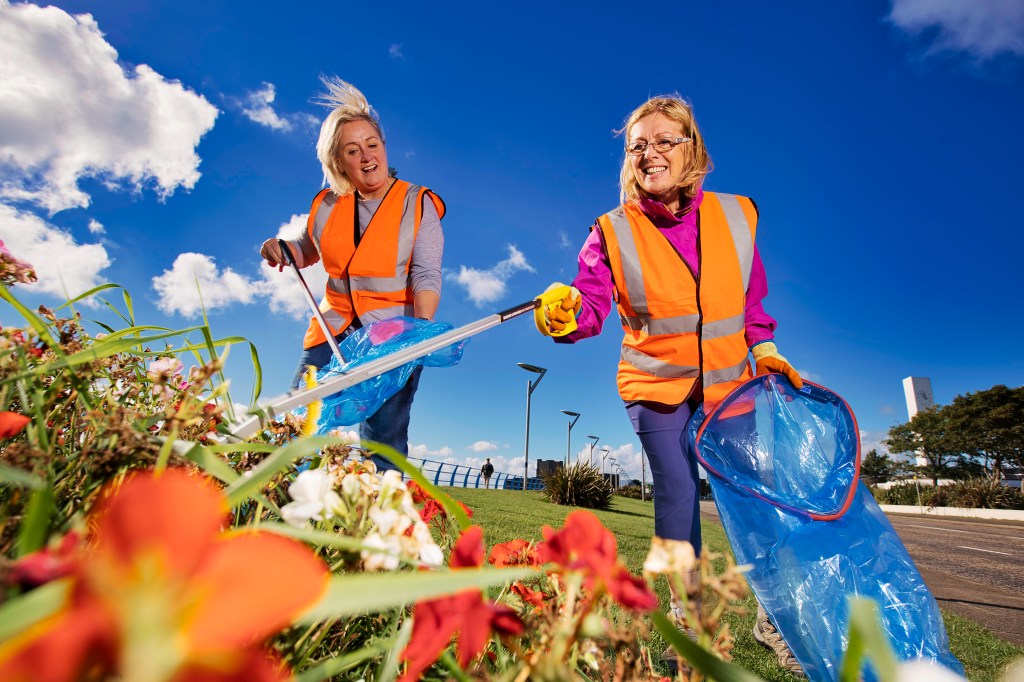
Over the past few years, we’ve also been reducing our own environmental footprint. We’ve cut the amount of waste sent to landfill and do much more recycling. We print less, saving paper and ink. We also introduced lots of new tech to help colleagues work from home and travel less for meetings.
So what might reducing the environmental impact of your project look like?
What you do will depend on your project – it’s not one size fits all. Some projects may be entirely environment focused. Or yours might involve smaller changes that can still have a big impact.
Here are a few ideas to consider:
- Can you work with like-minded organisations to share costs, resources, venues or equipment?
- Can you source products or equipment for your project locally? Less shipping distance means reduced emissions and energy usage – and can be great for your local community.
- Using more environmentally friendly building materials. For example, using permeable paving rather than concrete or tarmac. This improves water drainage to help prevent flooding.
- You could promote the use of public transport or encourage walking and cycling where possible.
- National Lottery Awards for All can fund green technology such as solar panels or heat pumps.

Projects that have made environmentally-friendly choices
Tobin Centre (Moortown) Ltd, pictured above, received £9,935 as part of our Environmental Top-up Pilot Programme. The group installed solar panels, reducing their environmental impact while saving them money on electricity bills.
Coalisland and District Community Food Bank in County Tyrone received a £290,582 grant to start a food bank and community hub. Knowing they needed a form of transport to collect food donations and make deliveries, the group chose to budget for an electric van. Electric vehicles emit fewer greenhouse gases and air pollutants so are much cleaner for the environment. They also have lower running costs.
St James’s Community Farm in West Belfast have received a £10,000 Awards for All grant to install solar panels on the roof of their farm. This will reduce their use of fossil fuels which are harmful to the environment. The cost savings will also help with the farm’s long term sustainability.
Footprints Women’s Centre in west Belfast is using a £199,649 grant to set up a Community Kitchen. They’re making greener choices by buying efficient kitchen equipment, with the highest energy star rating. They’ll also set up recycling bins and compost for food waste.
Eco Rangers Larne used a £10,000 Awards for All grant to buy essential equipment for their community clean-up activities, such as litter picks. This activity helped look after the local environment.
Chat to us for support
Our team are always happy to chat about your project ideas. If you want to discuss making your project environmentally friendly, get in touch.
028 9055 1455
enquiries.ni@tnlcommunityfund.org.uk
There are also several groups in Northern Ireland who can offer advice on your environmental footprint. These include Northern Ireland Environment Link, Keep Northern Ireland Beautiful, Action Renewables, Ulster Wildlife, The Conservation Volunteers and Northern Ireland Resources Network.
 The National Lottery Community Fund Northern Ireland